Does the Transfer Portal Actually Help? A Data-Driven Look at 1,227 College Basketball Transfers
The transfer portal has reshaped college basketball. But does transferring actually help players? We tracked 1,227 players who switched schools between the 2024-25 and 2025-26 seasons to find out.
The Big Picture: Transfers Slightly Improve
Across all 1,227 transfers, the average player saw a +0.7 PPG increase at their new school. 55.6% of transfers improved their scoring, while 52.4% improved their shooting efficiency. So a slight majority benefit — but it's far from guaranteed.
The real story, though, is in where players transfer.
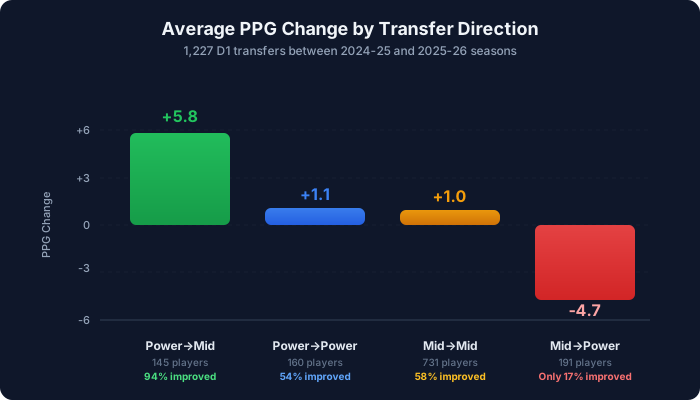
Stepping Down Is Almost a Sure Thing
Players who left power conference programs for mid-major schools saw massive gains:
- 145 players moved Power → Mid
- Average PPG change: +5.8
- 94% improved their scoring
This makes intuitive sense. A bench player at a power program often becomes a starter at a smaller school. The competition is less intense, and they get more minutes and touches.
The poster child: Dior Johnson went from averaging 3.1 PPG at UCF to 25.5 PPG at Tarleton State — a staggering +22.4 increase.
Stepping Up Is Brutal
The reverse tells the opposite story:
- 191 players moved Mid → Power
- Average PPG change: -4.7
- Only 17% improved their scoring
That means 83% of players who stepped up in competition saw their numbers drop. Not just scoring — rebounds dropped an average of 1.6 per game and shooting efficiency fell 1.8 percentage points.
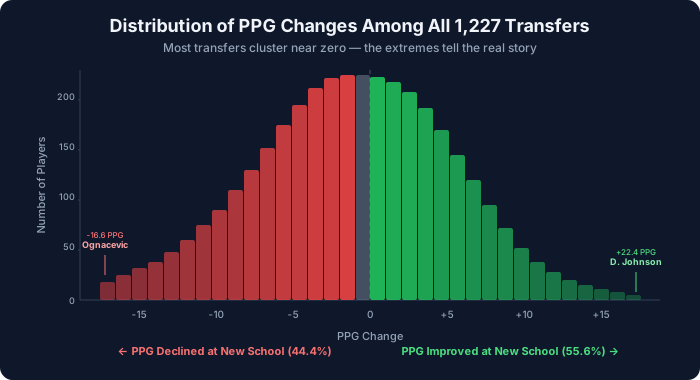
Example: Jacob Ognacevic went from 19.7 PPG at Lipscomb to just 3.1 PPG at Washington — the biggest decline in our dataset at -16.6 PPG. Noah Williamson dropped from 17.3 at Bucknell to 1.1 at Alabama.
The lesson for mid-major stars considering a power conference move: the numbers rarely follow you.
Lateral Moves Are a Coin Flip
For power-to-power transfers (160 players), the average change was +1.1 PPG with 54% improving. Mid-to-mid transfers (731 players — the largest group) averaged +1.0 PPG with 58% improving.
These players are typically seeking a better fit — more playing time, a different system, or a fresh start. Slight improvements, but nothing dramatic.
The Efficiency Question
Raw points don't tell the full story. A player's PPG might drop because they're playing fewer minutes on a deeper roster, not because they got worse. That's why we also looked at shooting percentages:
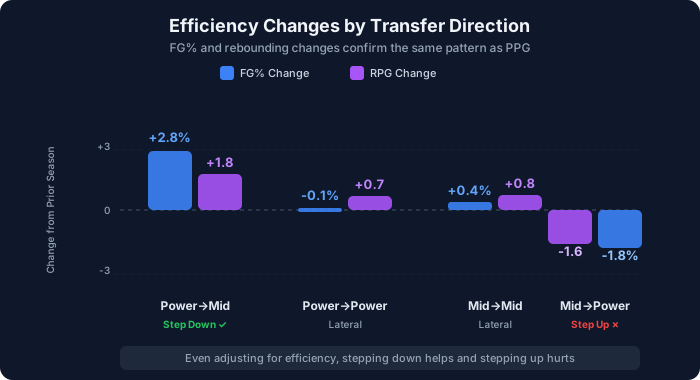
- Step Down: FG% improved by +2.8 on average
- Step Up: FG% dropped by -1.8 on average
- Lateral Power: FG% essentially flat (-0.1)
- Lateral Mid: FG% improved slightly (+0.4)
Even after adjusting for efficiency, the pattern holds: stepping down helps, stepping up hurts.
Which Teams Won the Transfer Portal?
Not all programs use the portal equally. Here are the teams that gained — and lost — the most through transfers this season.
Best Portal Hauls
Among teams with 3+ incoming transfers, these programs brought in the highest-impact players:
| Team | Incoming | Avg PPG of Incoming | Outgoing |
|---|---|---|---|
| Prairie View A&M | 3 | 17.1 PPG | 3 |
| Auburn | 3 | 14.6 PPG | 2 |
| Oklahoma | 4 | 14.1 PPG | 3 |
| Binghamton | 3 | 13.1 PPG | 1 |
| Louisville | 3 | 12.7 PPG | 1 |
| Memphis | 12 | 6.6 PPG | 5 |
Prairie View A&M topped all D1 programs with incoming transfers averaging 17.1 PPG. Among power programs, Auburn (14.6 PPG) and Oklahoma (14.1 PPG) made the highest-impact additions. Memphis took a different approach — volume over quality with 12 incoming transfers, essentially rebuilding their entire roster through the portal.
Biggest Talent Drains
| Team | Players Lost | Avg PPG Lost Per Player | Players Gained |
|---|---|---|---|
| Valparaiso | 9 | 7.9 PPG | 2 |
| Southern Illinois | 6 | 11.8 PPG | 4 |
| Green Bay | 7 | 10.0 PPG | 0 |
| Virginia | 9 | 7.1 PPG | 6 |
| Robert Morris | 5 | 12.7 PPG | 5 |
Green Bay lost 7 players to the portal without gaining a single transfer back — the ultimate portal drain. Southern Illinois lost 6 players who averaged nearly 12 PPG each. Virginia led all power programs in departures (9 players left), a sign of roster instability.
The pattern is clear: mid-major programs are feeding talent to larger schools while struggling to replace it.
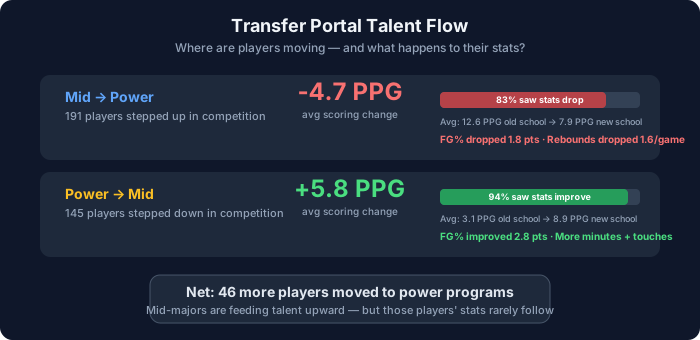
The numbers tell the story: 191 players moved from mid-major to power programs, while only 145 went the other direction. That's a net drain of 46 players flowing upward. The players stepping up were stars at their old schools (12.6 PPG average) but became role players at their new ones (7.9 PPG). Meanwhile, the players stepping down were bench players at power programs (3.1 PPG) who became significant contributors at mid-majors (8.9 PPG).
| Direction | Players | Avg PPG (Old School) | Avg PPG (New School) | Change |
|---|---|---|---|---|
| Mid to Power | 191 | 12.6 | 7.9 | -4.7 |
| Power to Power | 160 | 8.3 | 9.4 | +1.1 |
| Mid to Mid | 731 | 7.4 | 8.4 | +1.0 |
| Power to Mid | 145 | 3.1 | 8.9 | +5.8 |
The NIL Factor
The data alone doesn't explain why 191 players chose to step up to power conferences despite 83% seeing their stats decline. The answer is NIL.
For many transfers, the financial incentives of a power conference NIL deal outweigh the drop in playing time and production. A bench player at Alabama with a six-figure NIL deal may be making a better career decision than a 15 PPG scorer at a mid-major — even if the box score says otherwise. NIL has fundamentally changed the calculus of transferring: it's no longer just about basketball development, it's about brand building and financial opportunity.
This also explains the talent drain at mid-major programs. Schools like Green Bay and Valparaiso aren't just losing players to better basketball — they're losing them to better NIL markets. Until mid-major programs can compete financially, the portal pipeline will continue flowing upward.
What This Means for March Madness
When filling out your bracket, consider which teams rely heavily on transfers — and where those transfers came from:
- Teams loaded with step-down transfers (former power conference players now at mid-majors) often overperform their seed. These are experienced players dominating weaker competition.
- Teams with step-up transfers may look good on paper but those players are adjusting to a higher level of play. Their season stats from their previous school won't translate.
- Power-to-power transfers with positive PPG changes found a better fit — they might be peaking at the right time.
Explore the Full Data
Want to dig deeper? Check out our CBB Transfer Portal Impact page where you can search any player or team, filter by transfer direction, and see the full stat breakdowns. We also have a Style Matchup Matrix that shows how different playing styles match up historically — useful context for every tournament game.
For more college basketball analytics including player comparisons, game flow analysis, team matchups, and tournament bracket analysis, explore our full CBB analytics suite.
Data includes all D1 players who appeared on different teams in the 2024-25 and 2025-26 seasons with at least 5 games played each year. "Power" conferences include ACC, Big 12, Big East, Big Ten, SEC, and other major programs. Transfer direction is inferred from team classification, not official portal data.