What Actually Wins Games in College Basketball?
With conference tournaments underway and March Madness around the corner, we dug into play-by-play data from all 5,927 D1 college basketball games this season to find out what actually predicts winning. Some of the results might surprise you.
Free Throw Percentage Is Nearly Meaningless in Close Games
Conventional wisdom says free throw shooting wins close games. The data tells a different story.
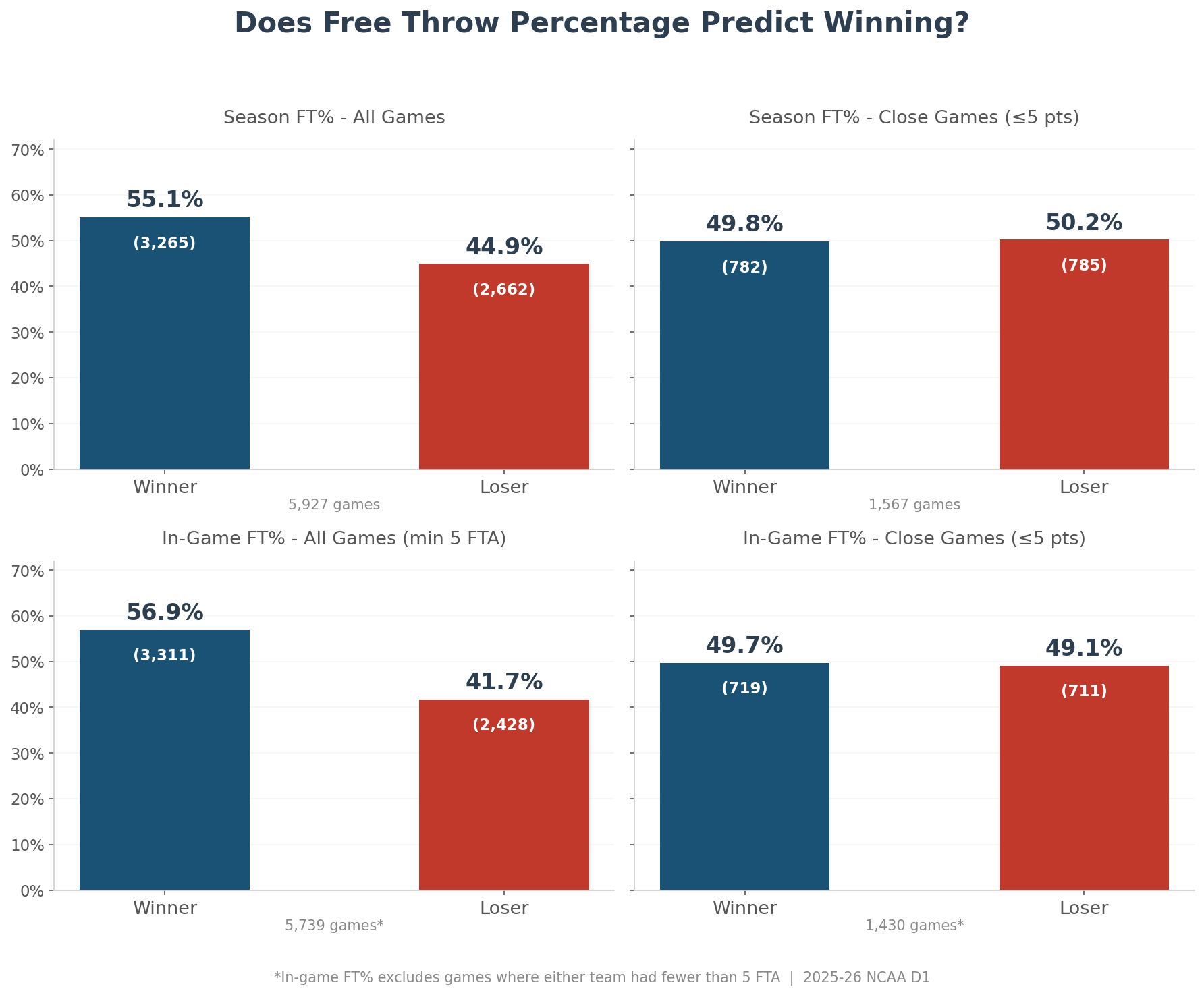
We looked at this two ways: which team had the better season-long free throw percentage, and which team shot better from the line in that specific game. Neither one is a strong predictor.
The team with the better season FT% won 55% of all games. The team that shot better in-game won 57%. But here's the real kicker: in games decided by 5 points or fewer, both measures drop to essentially 50/50. Free throw accuracy, whether you're looking at season averages or game-day performance, simply doesn't separate winners from losers when the game is on the line.
Getting to the Line Matters More Than Making Them
While percentage doesn't predict much, volume does, but you have to be careful here. The winning team had more free throw attempts in 65% of all games, but that's inflated by end-of-game fouling when the losing team intentionally sends the leader to the line.
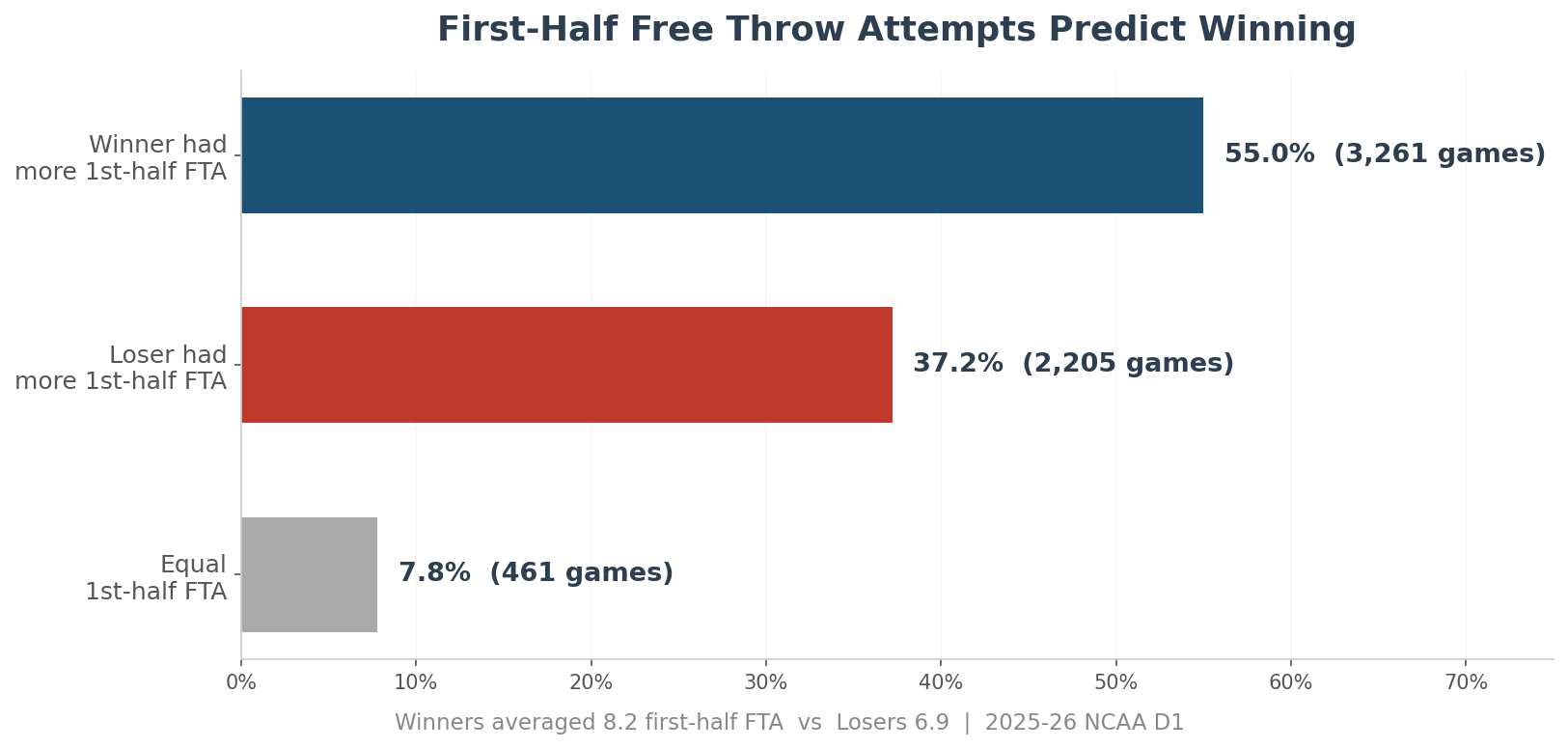
To remove that bias, we looked at first-half free throw attempts only. The team with more first-half FTA still went on to win 60% of the time, with winners averaging 8.2 attempts vs 6.9 for losers. That's a real signal that isn't explained away by late-game fouling.
The takeaway: teams that attack the basket aggressively and draw fouls early have a meaningful edge, regardless of whether they're converting at 68% or 78% from the line.
Duke vs. Clemson Tonight
A perfect real-world example: Duke hosts Clemson tonight in the ACC Tournament. Looking at free throw attempts by game segment, Duke gets to the line more often in nearly every four-minute window — except the final four minutes of the game. That last bucket is likely explained by Duke's dominance this season: when you win a lot of blowouts, opponents stop fouling late because the game is already decided.
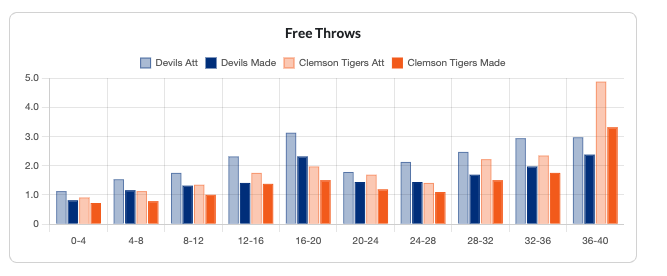
You can find matchup breakdowns like this on our CBB Matchup page — free throw tendencies, scoring runs, and more for any game this season.
How Safe Is a Halftime Lead?
If you're leading at halftime, history is on your side. Teams leading at the half won 79% of decided games this season. But the size of that lead matters enormously.
A 1-5 point halftime lead? You'll still win 63% of the time, but a comeback is far from unlikely. Push that lead to 11-15 points and your win probability jumps to 92%. At 16-20 points, it's 97%. And if you're up 21+, the game is essentially over: a 99.5% win rate with only 3 comebacks all season from that deficit.
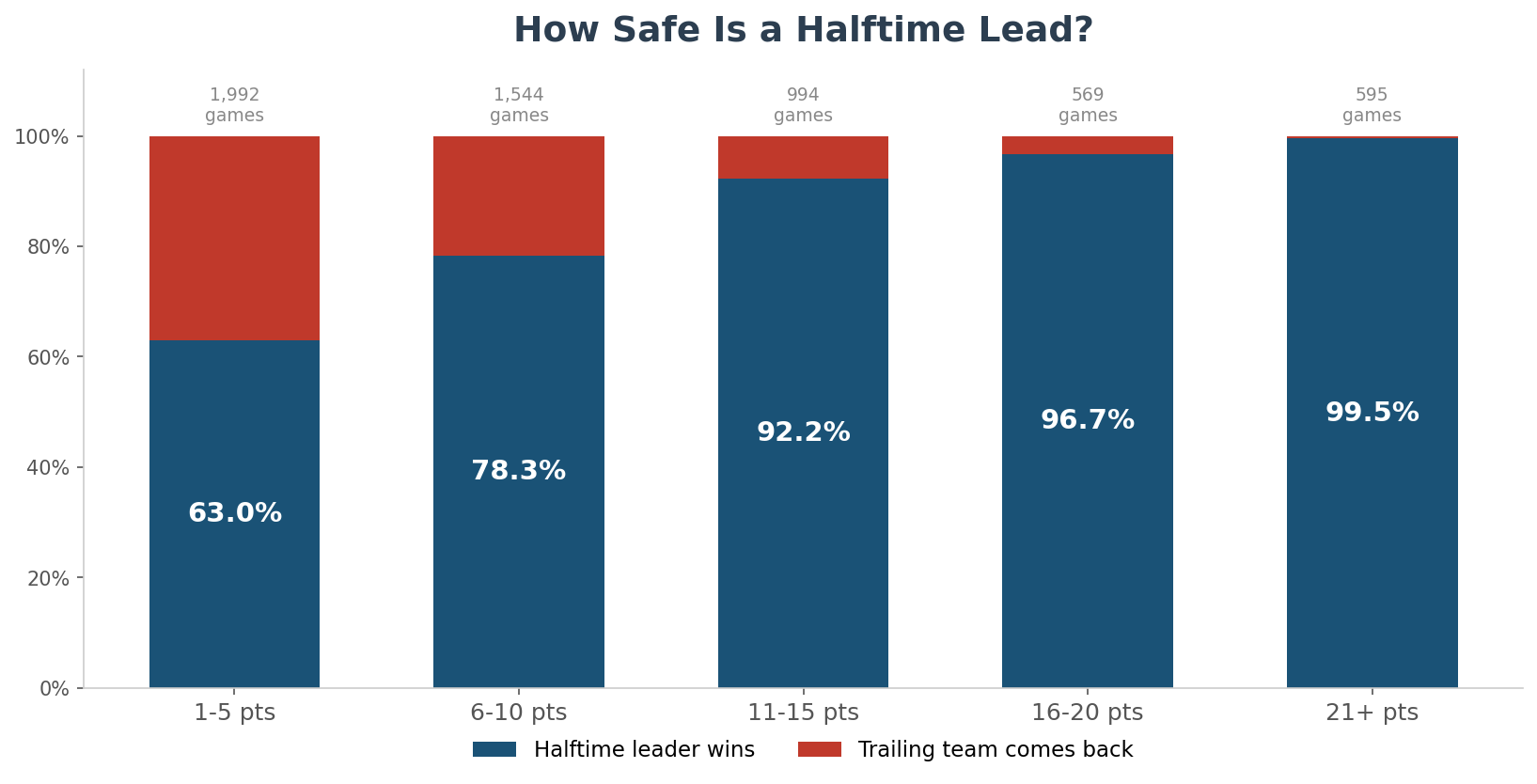
For bracket watchers, this means first-half performance is a strong signal for how a game will end. If your team builds a double-digit lead before the break, the odds are overwhelmingly in your favor.
Most Games Are Closer Than You Think
The most common final margin this season was 4 points, with 3, 4, and 5-point margins each occurring 329+ times. A total of 889 games were decided by 3 or fewer points, and 1,567 were decided by 5 or fewer. That's more than 1 in 4 games coming down to the wire.
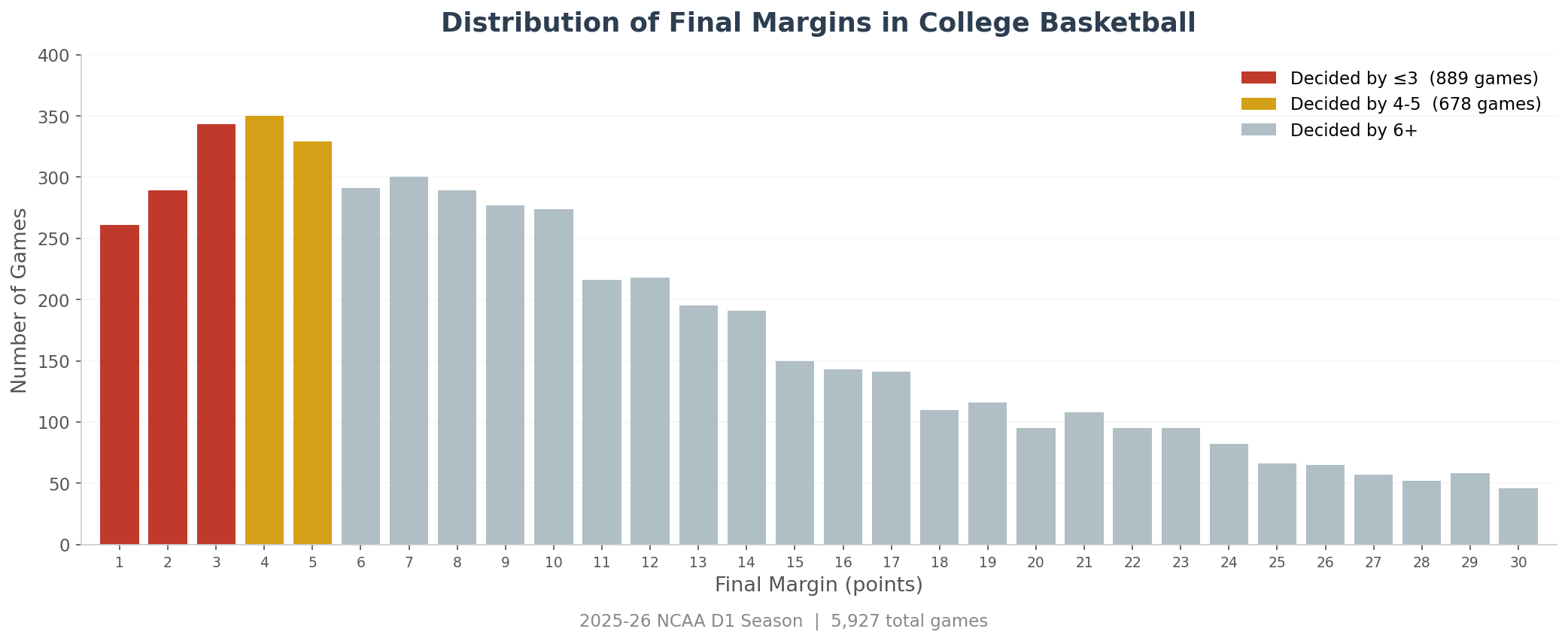
This is what makes March Madness so compelling. With so many games naturally coming down to the final possessions, upsets aren't flukes. They're baked into the math.
Home Court Still Matters. A Lot.
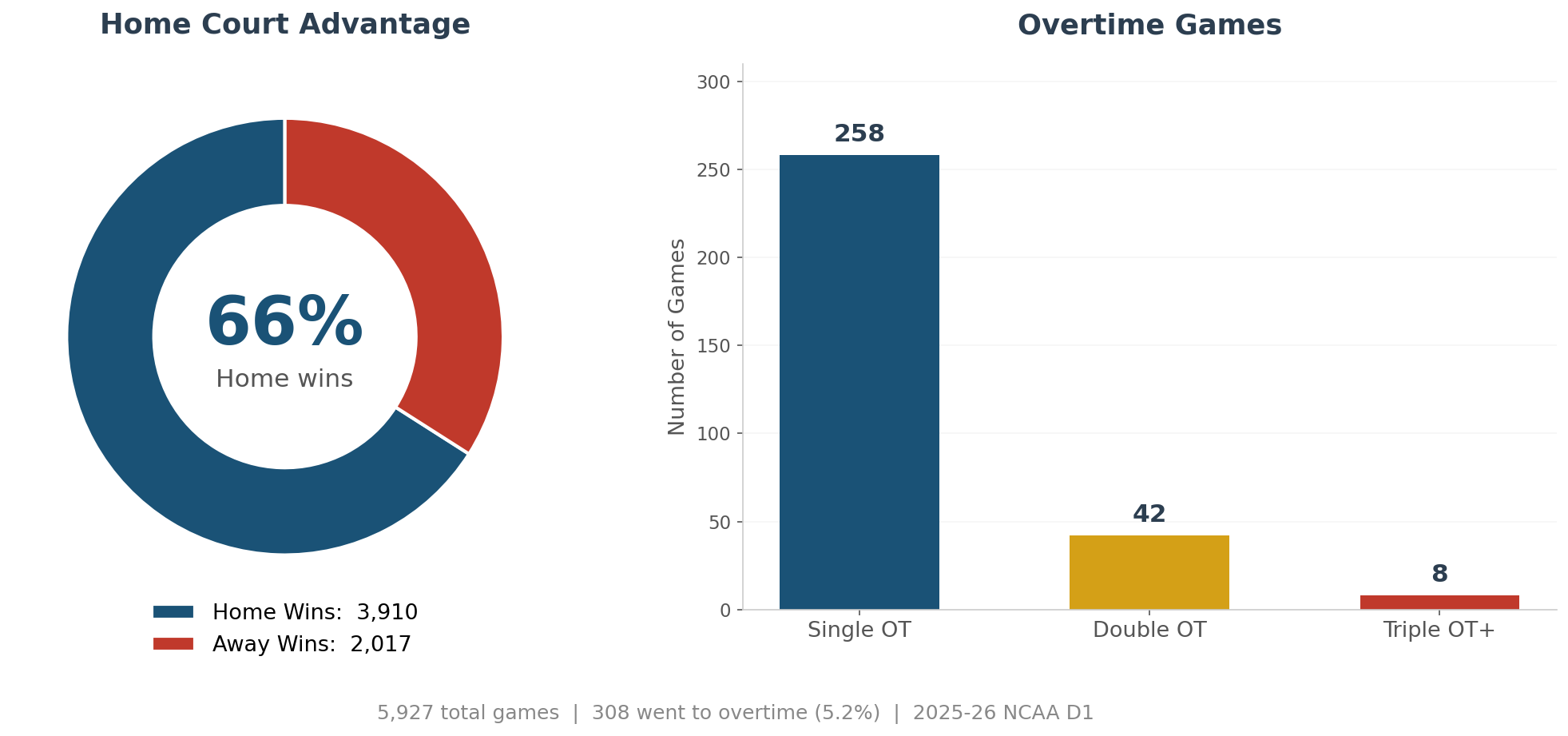
Home teams won 66% of games this season (3,910 wins vs 2,017 losses). That's a massive advantage that largely disappears at neutral-site tournament games, which is part of why March Madness produces so many upsets.
Of the 5,927 games played, 308 went to overtime (5.2%), with 50 reaching double OT and 8 going to triple overtime or beyond.
What This Means for March
As you fill out your brackets, remember:
- Don't overvalue free throw shooting percentage. In close tournament games, it's essentially random.
- Look for teams that draw fouls. Getting to the line 3-4 more times per game is a real edge.
- First-half performance matters. Teams that build early leads hold on nearly 4 out of 5 times.
- Neutral sites level the playing field. That 66% home-court advantage vanishes in March, creating the chaos we love.
Explore more college basketball analytics at malteranalytics.com/sports/cbb/matchup.